Stories
Success story: A Swedish rural community driven by cooperative principles
Community energy is key to action on the climate crisis. It can empower people, boost local economies, and reinvigorate communities. Community-led initiatives play an important role in the transition towards a 100% renewable and just energy future. Success stories of community energy projects can be found all over Europe. At REScoop.eu we want to highlight these stories to further accelerate the movement towards a cleaner and democratic system. On 4 July, we travel to Sweden to celebrate the International Day of Cooperatives with Röstånga energy cooperative, committed to innovative energy solutions that keep people in the countryside.
Addressing the local needs with energy solutions
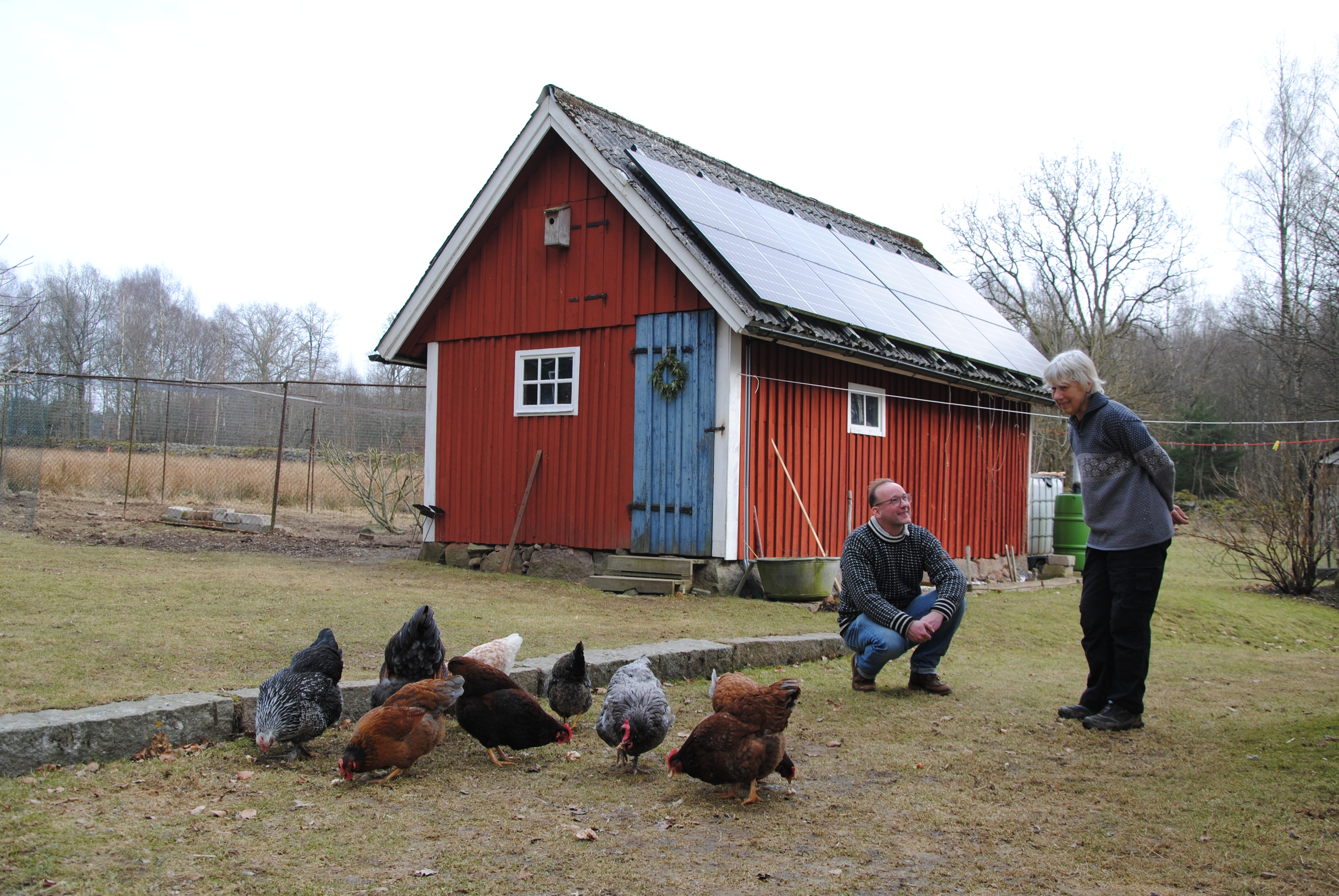
In Röstånga, a small rural village of 1,000 inhabitants in the south of Sweden, the local energy cooperative is bringing neighbours together around its renewable energy project. From installing solar panels to energy storage and carpooling, a strong sense of community is present in everything they do. Moreover, members benefit from upskilling activities and other initiatives that improve their quality of life.
Röstånga energy cooperative was founded in 2020 with the mission of offering affordable energy solutions to neighbours and strengthening the green local economy, decoupling energy use from growth. Six years later, they boast over 100 members, have installed around 70 PV plants with a combined capacity of 800 kWp, and have just launched a carsharing service. One of the co-founders and board members, Christian Stenqvist, explains how everything started: “I was part of a feasibility study about an exciting housing development in Röstånga, in which we envisioned some innovative renewable energy solutions. It was an ecovillage plan. When we presented the idea to neighbours and friends, they found it very inspiring. However, they also wanted to see real action right away, so we said, ‘let's just start something’, and we simply did it”.
One action of the cooperative together with other actors of the Röstånga community has been to conduct an economic analysis to identify the main financial costs of local residents, which revealed that housing, transportation and food were the most significant expenses. “We want to have cooperative solutions for all of these, and we have that now,” Christian states proudly.
A model with a long tradition in the country
As in other countries in Europe, cooperatives played a key role in the early development of Sweden’s energy system, mainly by bringing electricity to rural areas that were largely ignored by other commercial developers. In the first half of the 20th century, thousands of energy cooperatives operated small local grids. However, due to a wave of centralisation following the Second World War, very few of these initiatives remain active today. Today, Sweden’s electricity system is dominated by large profit-driven companies, with a few energy cooperatives active in wind and solar generation.
This cooperative history has shaped Röstånga's identity, making its members proud of a bottom-up model that wants to expand. To do it, they look at other sectors where cooperatives play a more significant role in the economy, such as the dairy industry or forest management.
As a cooperative registered under Swedish law, Röstånga's activities are governed by the seven cooperative principles. For example, the democratic member control through ‘one member, one vote’ is explicitly mentioned in the law, and Christian refers to their €50 membership stake – a considerably low amount considering the living cost of the country – as a mechanism to enable voluntary and open membership, the first cooperative principle.
Concern for community in action through electric carsharing
Christian also highlights that concern for the community and the local economy is at the heart of everything they do. He points to their recently launched EV carsharing service, a project aimed at bringing greater comfort to people's lives while cutting local emissions, as an example. “Most of the people who want to join the carsharing are older women. Some of them live alone and, even if they have a driving licence, they don't want to spend money on owning a new car or an old one that breaks down easily. They just want to be part of this model where they can borrow a car for a few trips a month,” Christian details.
The co-founder of the energy cooperative also describes how the carsharing service can help reduce local emissions. “Some people here own two or even three cars. It's mostly old petrol or diesel cars, and we want people to replace the second or the third car with being a member of the carsharing. Like this, they can cut their emissions from using those cars. And that's important, because electricity production in Sweden has almost zero emissions already, so reducing emissions in the transport sector can have a bigger impact than installing solar panels for electricity production. Combining the two, by charging the electric cars with local PV plants is terrific!”
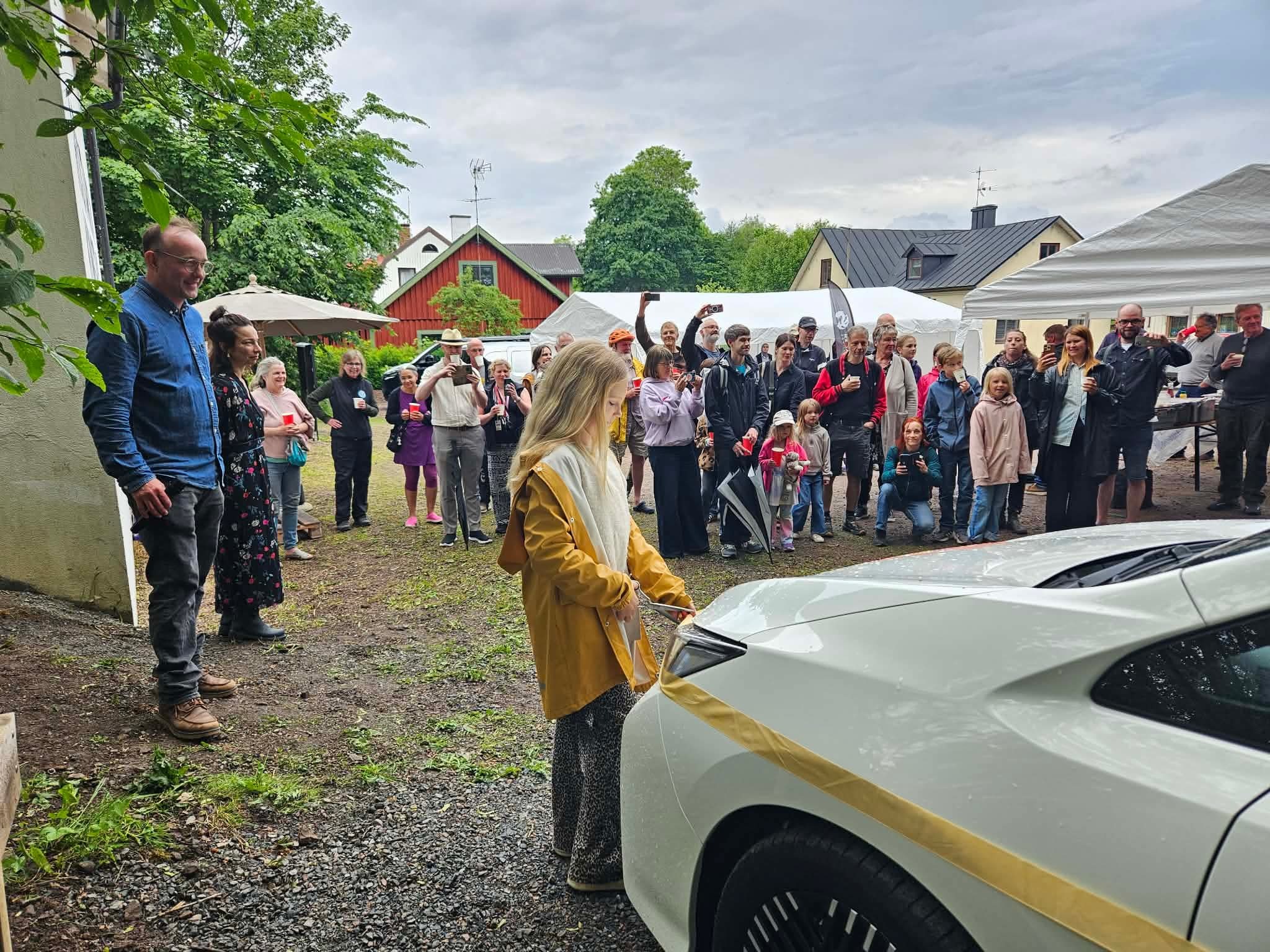
Being citizen-led, Röstånga’s solar installations also carry a concern for the community. “When there is a plan to build a huge PV park around here, it often comes from companies and landowners who don’t live and operate in the area. They care less about how the fields are exploited and more about how much money they can make in short sight. On the contrary, when an energy cooperative is doing it, it answers the needs of people living and working in the area.”
Education as a sense of ownership
Through its solar installations, the energy cooperative generates around €1000 of savings per year for each household in its membership. However, the positive impact extends beyond the economic dimension: it creates social cohesion, increasing trust and social responsibility among members.
For example, the cooperative teaches residents how to mount their own PV installations. “When members mount their solar installations, they also learn how the roof is constructed and can inspect its status. They feel that they are part and in control of their house. Sometimes, it can be a couple doing it together or a father and a daughter. It brings some family members together and then they become proud that they managed to do it together,” Christian says.
On a more personal level, Christian has found a place where he can call his neighbours ‘friends’. He moved to Röstånga when the energy cooperative was at an early stage, and nowadays, he is in direct contact with the members of the community.

“I have the chance to go out and meet people and that's my favourite part - to meet my neighbours and take the time to understand what they need. People became friends over the years and I can call anyone. For example, if my car breaks down, I have several contacts to call. We help each other and feel more prepared for difficulties.”
Lastly, reflecting on the sixth cooperative principle, cooperation among cooperatives, Christian highlights the added value of joining a network like REScoop.eu, which allows them to interact with cooperatives “outside of their bubble” and learn from others. At REScoop.eu, we firmly believe in this principle, which is core to our mission, and we proudly celebrate the many successful examples of cooperation among energy cooperatives happening all over Europe.
